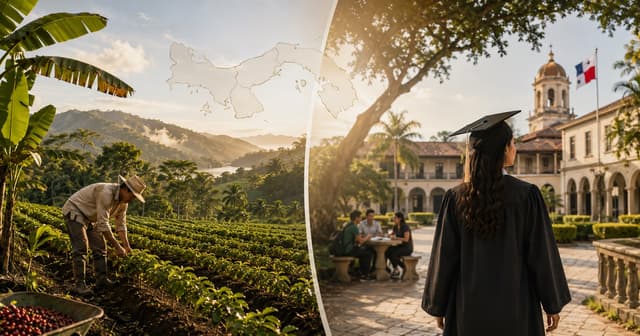
Panama is more than another warm country with WiFi. For remote workers with clients abroad, it can be something much more valuable: a practical base in the Americas with US dollar stability, strong flight connections, residency options, and a territorial tax system that can make long-term planning easier.
If you earn around US$2,500 per month or more from foreign clients, a remote job, consulting, online business, investments, or retirement income, Panama should be on your shortlist. Not because it is the cheapest country in Latin America, but because few places combine affordability, infrastructure, legal residency options, and long-term usefulness the way Panama does. If those clients pay a US LLC, Mercury is built for non-resident LLC owners.
Panama Works Because the Basics Work
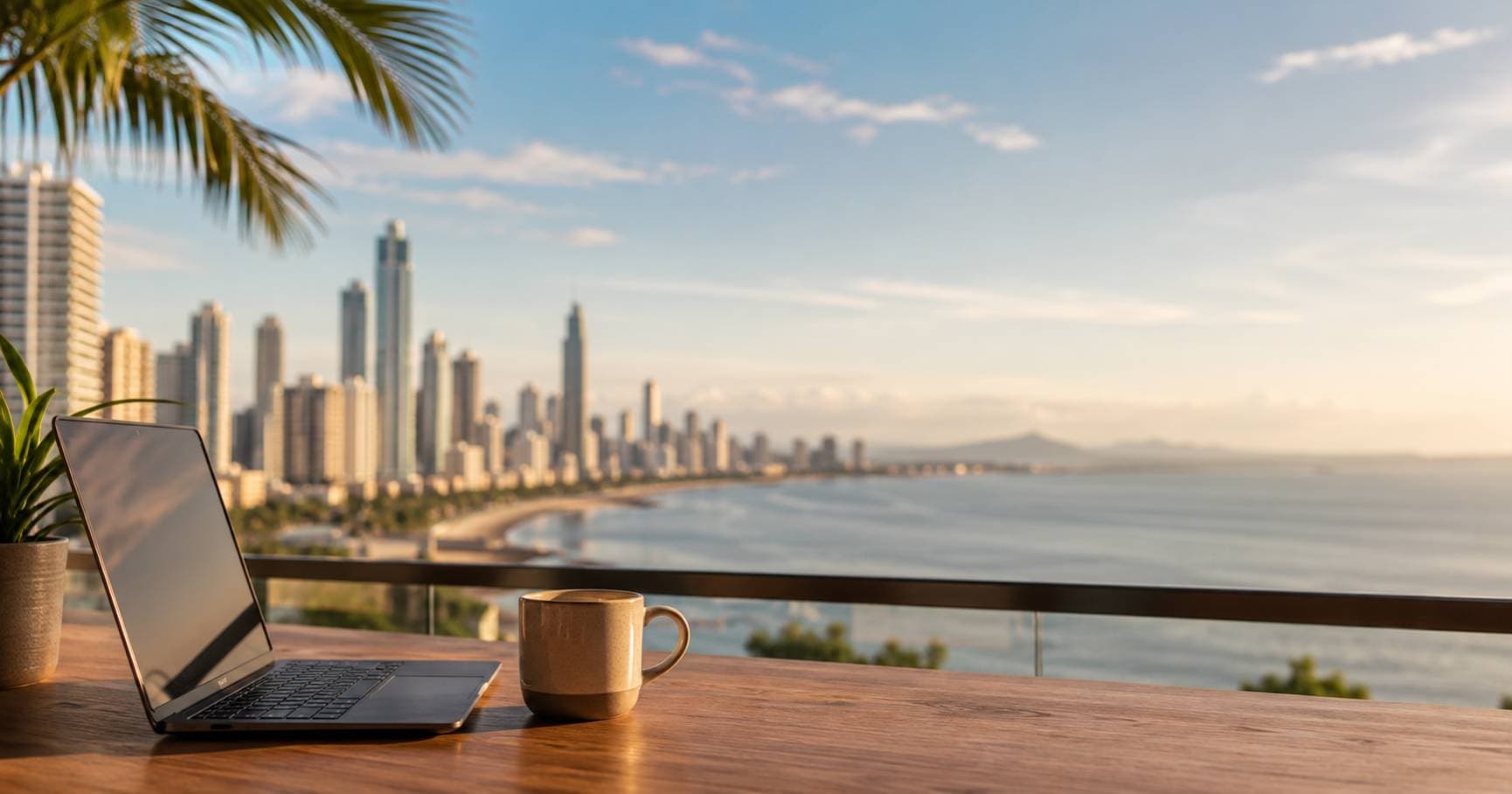
Some countries are beautiful but impractical. Panama is different. Panama City has modern apartments, reliable internet in most newer buildings, coworking spaces, private hospitals, international schools, banks, lawyers, accountants, and a business environment that supports people who need to work.
The time zone lines up well with US and Canadian business hours, and the airport connects across North, Central, and South America. The economy uses the US dollar, and the country is already familiar with foreigners, investors, retirees, entrepreneurs, and internationally mobile families. That is why Panama keeps showing up on the radar: not because it is trendy, but because it works.
Panama Is Not the Cheapest Nomad Stop, But It Can Still Be Very Affordable
But Panama is not expensive across the board, and the key is where you live.
In Panama City, many decent rentals fall around US$800 to US$1,300 per month, depending on the building, area, furniture, amenities, and lease terms. You can spend more in prime neighborhoods, but that range is realistic for many people who want city convenience.
Outside Panama City, the numbers can look very different. In smaller towns, inland areas, beach communities, and mountain regions, simple houses or apartments can sometimes be found for around US$400 per month, depending on location, condition, and expectations.
So no, Panama is not always the cheapest nomad destination. But it may be one of the best-value destinations when you factor in what you get: US dollar stability, good infrastructure, strong flight access, residency options, territorial tax treatment, and a real path from visitor to resident.
The Real Question: Are You a Nomad or a Base Builder?
Most people use the word "digital nomad" too loosely. There are really two different people hiding inside that phrase.
The first is the visitor. The visitor rents short term, works from cafés, stays until the tourist clock runs down, then moves on. Panama works for that, and so do many other countries.
The second is the base builder. The base builder wants something more durable: residency, local ID, banking options, and a jurisdiction they can point to when banks, brokers, payment processors, immigration officers, or tax authorities ask where they are actually based.
The Remote Worker Visa Is Useful, But It Is Not the Whole Plan
Panama has a specific visa for remote workers, designed for people who work remotely from Panama while earning income from outside the country. In plain English, your employer, clients, business, or income source must be foreign.
The income requirement is at least US$36,000 per year, or about US$3,000 per month. The visa is usually granted for 9 months and can be extended once, for a total of up to 18 months.
But here is the important part: the Remote Worker Visa is not permanent residency. It does not give you the same long-term position as a residency program, does not turn Panama into a durable Plan B on its own, and works only as a temporary remote-work solution.
Tourist Entry Lets You Test Panama
Panama also gives many travelers a generous tourist window. Americans and Canadians can generally stay in Panama for up to 180 days as tourists, and many other visa-exempt nationalities generally receive up to 90 days. That gives you time to test the country before making a serious decision.
But tourist entry has limits. You are still a visitor: banking is harder, administrative life is harder, and you do not have a cedula, residency, or the same standing as someone who has gone through the immigration process. Tourist entry is excellent for testing Panama; it is not a long-term strategy.
Residency Is Where Panama Becomes a Real Plan B
The Friendly Nations Visa can be a strong option for citizens of eligible countries who can meet the required economic connection to Panama. A few paths worth knowing about:
For retirees or people with qualifying lifetime pension income, the Pensionado Visa remains one of Panama's best-known options.
Higher-capital applicants who want a faster route may prefer the Qualified Investor Visa through qualifying investment. None of the recent Panama Canal headlines touch Panama's immigration programs.
Panama Wins on Continuity
The old digital nomad dream was constant movement. New:
That visa run part has quietly become harder. Panama's National Immigration Service enforces a rule requiring foreigners on tourist status to leave the country for at least 30 days between visits, and enforcement has tightened over time, with more scrutiny on travel history and residency status.
The Bottom Line
Panama is a strong digital nomad destination, but it is an even stronger Plan B country.
For remote workers earning around US$2,500 per month or more, Panama can work very well, especially if you are flexible about where you live. You can keep costs lower outside Panama City, pay more for capital-city convenience, test the lifestyle first, build toward residency if the country fits, and turn remote work into a real long-term base.
If you are considering Panama and want to know which route fits your situation, start with the free eligibility assessment on our website. After that, you can book a complimentary 30-minute consultation to review your options and next steps.
Michael L.
Canadian founder of Plan B Expat. Permanent resident of both Panama and Paraguay. MBA in International Business, trilingual (English, French, Spanish), and two decades of real estate brokerage experience in Quebec and Ontario. Writes from direct experience navigating the immigration, banking, and relocation systems of both countries.