
Paraguay Just Shortened the Road to Permanent Residency for Foreign Investors
Paraguay just shortened the road to permanent residency for foreign investors. On April 17, 2026, Minister of Industry and Commerce Marco Riquelme and National Migration Director Jorge Kronawetter launched the Paraguay Investor Pass during an official mission in Sao Paulo, Brazil. The program creates three new routes to direct permanent residency, sitting alongside the existing SUACE business route.
The headline number for most readers will be US$200,000. That is the threshold for either Paraguayan real estate or an investment in the Asuncion stock exchange, with the previous job-creation requirement waived. A lower entry point of US$150,000 applies to tourism projects. The existing SUACE route at US$70,000 with five formal jobs stays in force.
What Just Launched
The Investor Pass is a new immigration instrument, not a tweak to the existing system. Until April 17, 2026, foreign investors had two main paths into Paraguay. Either pursue standard temporary residency for two years, then convert to permanent. Or use the SUACE business investment route, commit US$70,000 to a Paraguayan company over a decade, and create at least five formal jobs.
Both routes worked. Neither was built for passive investors who wanted residency without running a business. The Investor Pass changes that.
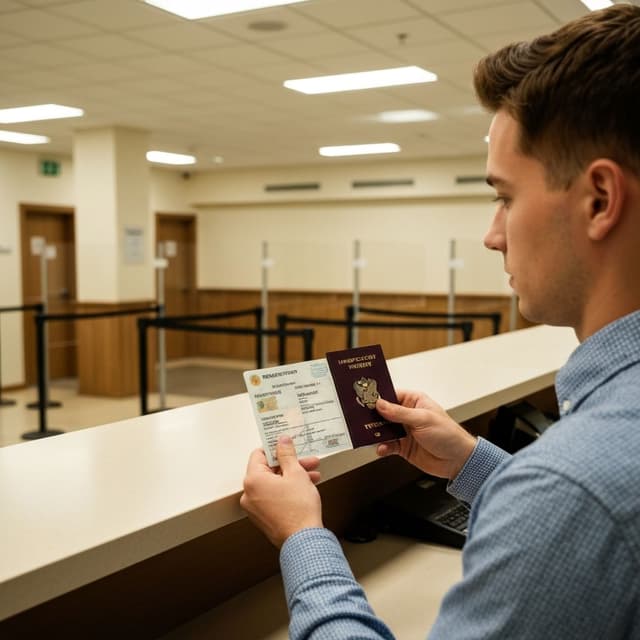
What approved applicants get. A 10-year permanent residency card, renewable at the end of the term. Spouses and dependent children are included in the same application. Three years after permanent residency is granted, holders become eligible to apply for Paraguayan citizenship. The Paraguayan passport ranks 24th globally in 2026, with visa-free or visa-on-arrival access to 142 destinations.
The Four Investment Routes
The Investor Pass framework now recognizes four qualifying routes to direct permanent residency:
Route 1: Real Estate at US$200,000. Direct property investment. No job creation requirement. The official announcement cites houses, apartments, offices, and land as eligible categories. The property has to be held for economic activity. Personal or family use does not qualify, and the title must stay in the investor's name for two years after approval.
Route 2: Paraguayan Stock Exchange at US$200,000. Investment in the Bolsa de Valores y Productos de Asuncion (BVPASA). No jobs required. The government framed this as a way to inject liquidity into the local stock market, which then funds Paraguayan industries.
Route 3: Tourism Projects at US$150,000. Investment in approved tourism sector projects. Subject to technical follow-up and ongoing monitoring by the relevant tourism authority. The lowest entry threshold of the new routes.
Route 4: SUACE Productive Investment at US$70,000. The existing route stays unchanged. Requires a business plan and commits the investor to creating at least five formal jobs over ten years. Remains the lowest-cost direct-to-permanent option for investors willing to build and operate a business.
Cross-cutting requirements apply to all four routes. Applicants must be 18 or older, hold a clean criminal record, pass Interpol checks, and obtain an Investor Certificate (Certificado de Inversionista) from the Ministry of Industry and Commerce. The certificate now formally covers all four investment categories. Anti-money laundering controls and a sworn declaration on the origin of funds apply across the board.
Investments can be denominated in U.S. dollars or in guaranies at the official exchange rate. The investment can be already completed or in progress, as long as the economic commitment is documented.
The routes cannot be combined. Migraciones confirmed to Plan B Expat on 8 September 2026 that each category must be met on its own terms. There is no arrangement under which a securities position is made up to the threshold with a property of lesser value, or the reverse. Choose one route and meet its full figure.
Real Estate at US$200,000
This is likely to be the most popular of the new routes. Paraguay places almost no restrictions on foreign property ownership. Per Central Bank of Paraguay data, the country's real estate sector has grown 31% since 2015. Prices for apartments in prime Asuncion neighborhoods typically run US$1,500 to US$2,000 per square meter, roughly half what comparable property costs in Buenos Aires or Sao Paulo.
The confirmed operational detail investors need to know: the US$200,000 real estate investment carries a 2-year mandatory holding period from the date residency is granted. You cannot sell the qualifying property within those two years without jeopardizing your residency status. Plan for a minimum 2-year ownership horizon before you consider this route.
What is still being clarified is whether raw land qualifies on the same footing as developed property, and whether the investment can be structured through a Paraguayan company or trust rather than in the applicant's personal name. Plan B Expat is working through those questions now.
For investors who want a tangible asset that produces rental income while satisfying the residency requirement, real estate is the cleanest fit. Gross rental yields in Asuncion typically run 5% to 9% for long-term residential, with short-term and Airbnb-style rentals reaching 10% or more under professional management. Rents are often denominated in U.S. dollars, which reduces currency risk for foreign investors.
Paraguayan Stock Exchange at US$200,000
This route is the most passive of the new options. No business to run, no property to manage, no jobs to create. The investor commits US$200,000 through Paraguay's stock exchange, the BVPASA, and that allocation alone supports the residency grant.
The confirmed requirements: the US$200,000 must be invested through a Paraguayan brokerage firm and held for a minimum of 2 years. Brokerage arms of Paraguayan banks qualify. You do not need a standalone brokerage house. The investment must remain on deposit with a Paraguay-domiciled institution for the full 2-year period.
What is still being clarified is which specific instruments qualify within those brokerage accounts: whether BVPASA-listed equities, sovereign bonds, corporate bonds, and mutual funds all qualify equally, and what happens if the underlying position loses value during the residency period.
Paraguay's stock exchange is small compared to established markets. Liquidity is limited. One signal: the BVPASA migrated to Nasdaq-powered trading infrastructure in January 2026, which professionalizes the market faster than most frontier economies do. Investors used to deeper U.S. or European markets should still expect a different operational experience. The trade-off is straightforward. You get permanent residency without running anything, in exchange for parking capital in a market with less depth and fewer instruments.
For high-net-worth investors who want residency without operational involvement, this is the route that maps closest to a Caribbean citizenship-by-investment fund subscription, except in Paraguay you own marketable securities rather than making a non-recoverable donation.
Tourism Projects at US$150,000
The lowest threshold among the new routes, and the one with the most operational commitment. Tourism projects require a business plan, formal MIC approval of the project, and ongoing technical follow-up from the tourism authority.
This is not a passive route. The government's framing is that the investment should support the development of Paraguay's tourism sector. Boutique hotels, eco-tourism lodges, hospitality services, and tourism infrastructure are the kinds of projects the program contemplates.
The questions still being clarified include exactly which project types qualify, whether you can invest in an existing approved development rather than launching a new project, the minimum operational period the investor must maintain, and whether tourism real estate (purchasing or developing a property within an approved hospitality project) counts toward the threshold.
If your background is hospitality or eco-tourism, this is the lowest-cost direct route to permanent residency in the new framework. If you are a passive capital allocator, this is probably not your category.
SUACE Stays in Force at US$70,000
The existing SUACE route did not change. US$70,000 minimum, five formal jobs over ten years, business plan required, direct permanent residency. The Investor Pass formalizes SUACE as one of the four legs of a unified investor immigration framework, but the operational requirements are identical to what they were before April 17, 2026.
For applicants who want the lowest-cost direct-to-permanent route and are willing to build and operate a business in Paraguay, SUACE remains the strongest fit. It also has the longest track record. The infrastructure is mature, and the procedural details are well understood.
Tax Benefits and the Territorial System
The Investor Pass bundles a tax incentive. The dividend tax rate for resident investors drops from 15% to 8%. For investors routing income through Paraguayan corporate structures, this saves US$7,000 per year on every US$100,000 of dividend income, which compounds over a decade.
The dividend rate change sits inside Paraguay's broader territorial tax system, which is the deeper tax story most articles bury. Foreign-source income is not taxed at all in Paraguay. Period. Domestic income is taxed at a flat 10% corporate rate. Capital gains on Paraguayan securities held by tax residents are subject to specific rules.
For the Investor Pass to deliver the full tax benefit, the holder needs to also become a Paraguayan tax resident, which is a separate question from immigration residency. Tax residency typically requires either spending real time in Paraguay, registering for a RUC tax number, or demonstrating economic substance in the country. Immigration residency alone does not automatically trigger tax residency.
This is a critical distinction that gets glossed over in most marketing material. You can hold Paraguay's permanent residency without living there: permanent residence is cancelled only after an unjustified absence of more than three years. You can also become a Paraguayan tax resident and access the territorial system. They are not the same thing, and one does not automatically deliver the other.
For tax-conscious investors, the Investor Pass plus tax residency adds up. Foreign income remains untaxed by Paraguay. Domestic dividends are taxed at 8%. There is no minimum-presence requirement to maintain residency. Permanent residence is cancelled only after an unjustified absence of more than three years.
Banking Remains the Friction Point
The MIC announcement openly acknowledged what most coverage glosses over. Opening a Paraguayan bank account is still difficult, and registering an investment requires bank infrastructure for several of the new categories. The government has flagged joint work with the Central Bank of Paraguay to simplify account opening through 2026, but as of the launch, banking access lags the immigration framework.
Anyone planning to use the Investor Pass should treat banking setup as the longest pole in the tent and plan your documentation around it. Source-of-funds proof, residency status, and a Paraguayan tax number (RUC) are typically the gating items. We coordinate this step with our Paraguayan counsel network as part of the application, because clean applications fail fastest when banking is left for the end.
Investor Pass Versus the Standard Track
The Investor Pass is not the right move for everyone. Paraguay's standard temporary residency track has no investment minimum and grants permanent residency after two years. Get current prices for your situation.
For most applicants who do not have US$150,000 to US$200,000 in deployable capital, the standard track is still the right answer. It is the cheapest legitimate second residency on the planet. The only real cost is the two-year wait between temporary and permanent.
The Investor Pass makes sense when speed matters more than cost. If you need permanent residency immediately rather than two years from now, if you have capital to deploy anyway, and if your investment fits one of the four categories, the Investor Pass closes the timeline gap.
There is also a profile question. Standard residency requires you to declare a profession or activity. For retirees, the Jubilado declaration with stable pension income is the classic fit, with the formal solvency review happening at the conversion to permanent residency two years later. For non-retired applicants without significant pension income or investment capital, the standard track can still work but requires demonstrating economic solvency through other means.
The Investor Pass eliminates that profile question entirely. If you have the capital and meet the criminal record check, you qualify. The investment is the qualifying action.
Who This Pathway Fits
The Investor Pass is a strong fit if you want permanent residency immediately, you have US$70,000 to US$200,000 in deployable capital, your investment fits one of the four categories, and you value the dividend tax reduction or the territorial tax system.
It is the right call for a Brazilian executive responding to the late-2025 tax overhaul, a U.S. or Canadian retiree who already plans to allocate capital to international real estate or securities, or a tax-conscious entrepreneur who wants a parking spot for permanent residency without the operational commitment of running a Paraguayan business.
The standard temporary residency track is still the right call if you do not need permanent status immediately, your capital is below the investor thresholds, you are buying a residential property purely for personal use, or you want the lowest possible entry cost.
SUACE specifically fits if you have business operations you can establish in Paraguay, you can credibly create five formal jobs, and the US$70,000 threshold is achievable. SUACE remains the lowest-cost direct-to-permanent route in the new framework, and the most established of the four categories.
Real estate fits if you want a tangible asset producing rental income while satisfying the residency requirement. Stock exchange fits if you want the most passive option and are comfortable with the BVPASA's smaller size. Tourism fits if you have hospitality or eco-tourism experience and want the lowest entry threshold among the passive routes.
For most readers weighing whether the Investor Pass fits their situation, the right next step is a consultation. The four categories sound similar at the threshold level but diverge sharply on operational commitment, asset liquidity, and what the money has to do once invested. Picking the wrong category can cost you the residency.
This guide reflects the Paraguay Investor Pass announcement of April 17, 2026 and the official explainers published by the Ministry of Industry and Commerce. Implementing details for each route are still being clarified by Paraguay's MIC and the Direccion Nacional de Migraciones. We update this article as confirmed details become available. For your specific situation, book a free consultation and we will walk through which category, if any, is the right fit.
Michael L.
Canadian founder of Plan B Expat and a permanent resident of both Panama and Paraguay. Holds an MBA from SKEMA Business School, France, is trilingual (English, French, Spanish), and spent 21 years as a licensed real estate broker in Quebec and Ontario. Writes from direct experience with the immigration, banking, and relocation systems of both countries.