Paraguay's 12-Month Consecutive Absence Rule: What Temporary Residents Need to Know
If you have a Paraguay yellow card and have been outside the country for more than a year, this affects you directly.
Migraciones (Dirección Nacional de Migraciones) began enforcing a requirement that has caught many expats off guard. The enforcement began in early 2026, but the rule itself is not new. The rule itself isn't new, but its strict application, and the fact that it's being applied retroactively, is.
Here's what's happening, who's affected, and what you can do about it.
The New Enforcement
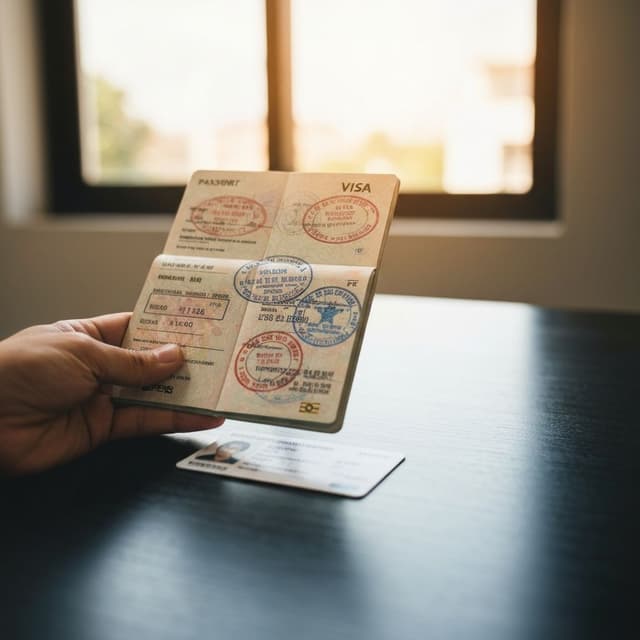
Paraguay's immigration office is now actively reviewing the entry and exit records of anyone applying to convert their Temporary Residency (the yellow card) to Permanent Residency.
The rule being enforced: Applicants must not have spent more than 12 consecutive months outside Paraguay since their Temporary Residency was approved.
The 12-month clock starts from the approval date printed on your yellow card, not from when you applied or when you first entered the country.
What Happens If You've Been Gone Too Long
If Migraciones determines that you remained outside Paraguay for more than 12 consecutive months after your Temporary Residency was granted, they are currently requiring applicants to start over with a new Temporary Residency application.
That means waiting another two years before you can apply for Permanent Residency.
One piece of good news: If you need to reapply for Temporary Residency under this circumstance, you won't need to obtain new documents from your home country. Migraciones is accepting previously submitted documentation, assuming it's still on file.
The Retroactive Application
This is the part that has surprised people.
The enforcement began in early 2026, but Migraciones is applying it to applications based on the applicant's travel history since their original Temporary Residency approval, regardless of when that was.
Example scenario: Someone who obtained Temporary Residency in 2025 and then remained outside Paraguay for more than 12 consecutive months would not be eligible to apply for Permanent Residency in 2027. Instead, they would need to apply for a new Temporary Residency first, then wait the standard two-year period before becoming eligible for Permanent Residency.
For Permanent Residents
If you've already obtained Permanent Residency in Paraguay, a different rule applies.
Permanent residents cannot remain outside Paraguay for more than three consecutive years without risking cancellation of their residency status. This has been part of Paraguay's immigration regulations and is not new, but it's worth keeping in mind if you hold a permanent card and spend extended periods abroad.
Why This Matters for Plan B Strategies
Many people pursuing Paraguay residency are doing so as part of a broader "Plan B" strategy. They may not intend to live in Paraguay full-time, at least not immediately. The appeal of Paraguay's residency program has long been its flexibility: get the paperwork done, maintain the status with periodic visits, and have a second residency in place if you ever need it.
This new enforcement changes the calculation.
If you're treating Paraguay as a backup option while living elsewhere, you now need to ensure you're entering the country at least once every 12 months during your Temporary Residency period. Miss that window, and you may find yourself back at square one when you try to convert to Permanent Residency.
Practical Takeaways
A Note on Policy Changes
Immigration policies in Paraguay, as in most countries, can change at any time. The interpretation and enforcement of existing rules can also shift without formal announcement.
What we're seeing with this 12-month rule is exactly that: a stricter application of existing regulations that has taken many applicants by surprise.
The information above reflects what Migraciones is currently requiring as of March 2026. We'll continue monitoring for any changes and will update this article if the situation evolves.
Questions?
If you're planning to pursue Paraguay residency or are in the middle of the process and concerned about how this affects you, contact us for a consultation.
This article is based on information from immigration professionals working directly with Paraguay's Migraciones office. It is provided for informational purposes and does not constitute legal advice. Immigration requirements can change without notice, and individual circumstances vary.
Michael L.
Canadian founder of Plan B Expat. Permanent resident of both Panama and Paraguay. MBA in International Business, trilingual (English, French, Spanish), and two decades of real estate brokerage experience in Quebec and Ontario. Writes from direct experience navigating the immigration, banking, and relocation systems of both countries.