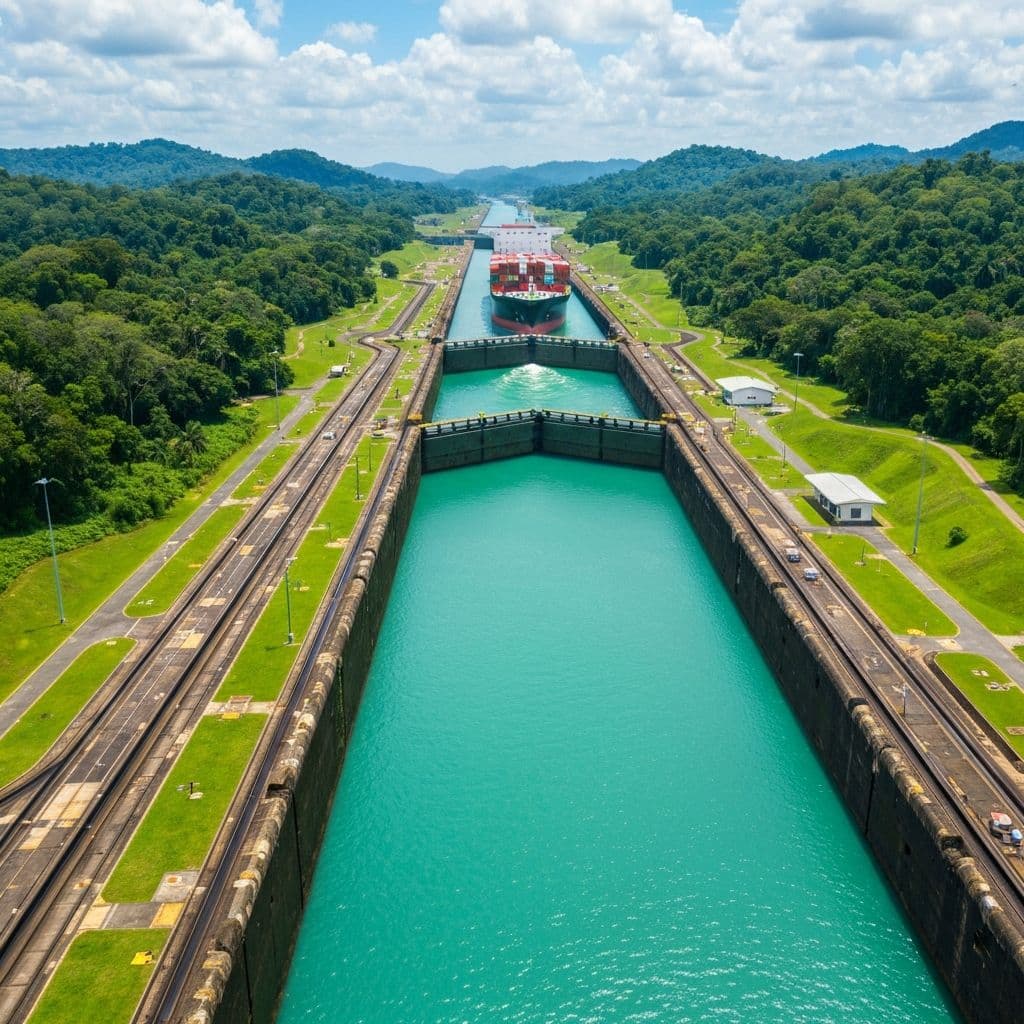
If you've been following the news out of Panama, you've probably seen some alarming headlines. The Supreme Court just annulled the port concession for Panama Ports Company (the CK Hutchison subsidiary operating terminals at both ends of the canal). Former President Martín Torrijos is warning that the decision threatens the canal's neutrality.
And here's where it gets interesting: the US revoked Torrijos's visa for saying so.
The son of Omar Torrijos - the man who negotiated the 1977 treaties guaranteeing the canal's neutrality - had his US visa revoked for defending the very neutrality the United States agreed to nearly 50 years ago.
So what does this mean for Americans considering Panama for residency?
The short answer: not much. But the situation is worth understanding.
What's Actually Happening
The drama playing out in Panama is geopolitical theater between the US and China. Since Trump's second inauguration in January 2025, when he declared "we didn't give it to China, we gave it to Panama - and we're taking it back," Panama has been navigating impossible pressure from Washington.
Here's what Panama has done to appease the US over the past year:
As Torrijos put it: this decision "did not occur by coincidence." The timing, he argues, serves clear external interests.
The Neutrality Paradox
The 1977 Torrijos-Carter Treaties are explicit. Article II of the Neutrality Treaty states that the canal shall remain "open to peaceful transit by the vessels of all nations on terms of entire equality, so that there will be no discrimination against any nation."
The only exceptions carved out were for Colombia and Costa Rica - Panama's neighbors with historical ties predating the canal itself.
Trump's position is that Panama violated the treaty's "spirit" by charging US Navy vessels for transit (about $1 million per year over 26 years - hardly a fortune). Secretary of State Marco Rubio visited Panama in early 2025 demanding toll-free passage for US warships. The State Department later claimed they'd reached a deal. President Mulino denied it.
Here's the paradox Torrijos is highlighting: by removing Chinese-linked operators specifically to appease one superpower, Panama is demonstrating it will discriminate based on nationality under pressure. That's the opposite of neutrality.
His argument is legally coherent: "The only defense of the Canal is its neutrality. That benefits Panama, the United States, and all Canal users."
The Irony: The US revoked the visa of Omar Torrijos's son for defending the neutrality principle the US negotiated and signed in 1977.
The Visa Revocations
In April 2025, Torrijos and Ricardo Lombana (a former presidential candidate) signed a document called "National Unity and Defense of Sovereignty" along with hundreds of other Panamanians, repudiating the US-Panama agreements on military presence and canal access.
By June, both had their US visas cancelled.
Torrijos - who attended high school at St. John's Northwestern Military Academy in Wisconsin, earned degrees from Texas A&M, and worked for years at McDonald's in Chicago - responded: "If defending my country's interests and rejecting foreign military presence leads to the revocation of my visa, I accept it with pride."
US Ambassador Kevin Marino Cabrera had already warned critics: "A visa is a privilege, not a right." He called those opposing US military presence in Panama "intellectually dishonest."
Why This Doesn't Affect Your Residency Plans
The tension is at the infrastructure and great-power-competition level. None of this touches:
If anything, Panama's eagerness to align with US interests creates a more favorable environment for American expats in the near term. The Mulino administration is clearly prioritizing the Washington relationship, which typically means smoother processing and continued stability for Americans.
What We're Watching
I keep close tabs on this situation for my clients. A few things worth monitoring:
The port transition. Torrijos flagged that there's no defined timeline for "transitional management" of the ports, and certain conglomerates in the logistics chain will gain competitive advantages. Translation: whoever the US prefers will likely slide in to replace CK Hutchison. This affects shipping costs and logistics, not residency.
The precedent problem. If Panama establishes that concessions can be invalidated when a superpower demands it, every future contract becomes conditional on geopolitics. That's concerning for large-scale infrastructure investors, not individual expats pursuing residency.
US-Panama relations. The current alignment benefits Americans. A change in either government's posture could shift that - but we're talking years out, not months.
The Bottom Line
Panama remains one of the most accessible and practical residency options for Americans. The Qualified Investor Visa provides a clear path to permanent residency in 45-60 days. The dollar economy eliminates currency risk. The territorial tax system offers legitimate planning opportunities.
The canal headlines are dramatic - a genuine clash between great power competition, national sovereignty, and treaty interpretation. But they're not about whether Panama is a good place to establish your Plan B.
I'll continue monitoring and will update if anything changes that actually affects residency planning.
Have questions about Panama residency? Book a consultation to discuss whether the Qualified Investor Visa or other programs might fit your situation.
Michael L.
Canadian founder of Plan B Expat. Permanent resident of both Panama and Paraguay. MBA in International Business, trilingual (English, French, Spanish), and two decades of real estate brokerage experience in Quebec and Ontario. Writes from direct experience navigating the immigration, banking, and relocation systems of both countries.